

Solar-driven fuel synthesis
The growing energy demand from our society requires the development of a sustainable, environmentally clean and secure energy source and storage system. In this context, the main goal of artificial photosynthesis is to develop a photocatalytic system able to produce high energy content molecular fuels or feedstocks from water and/or CO2, as an approach to capture and storage solar energy.
Our research addresses the photo(electro)chemical characterization and development of photoelectrodes and nanoparticles for solar driven fuel synthesis, with the primary focus being the light driven splitting of water into hydrogen and oxygen. In particular, we are interested in determining the kinetics and yields of charge separation and recombination, and the kinetics of water oxidation / reduction, using a suite of transient absorption spectrometers, complimented by impedance spectroscopies and photoelectrochemical measurements.
Our work on solar fuels involves collaborations across Imperial as part of the Imperial Artificial Leaf Initiative and across the UK as part of the UK Solar Fuels Network and externally, including in particular with EPFL (Prof Michael Gratzel), UCL (Prof Ivan Parkin and Dr Junwang Tang) and Cambridge University (Dr Erwin Reisner).
The photoactive materials employed in our studies primarily comprise metal oxide films and nanoparticles, with in some cases the addition of molecular dyes and catalysts.
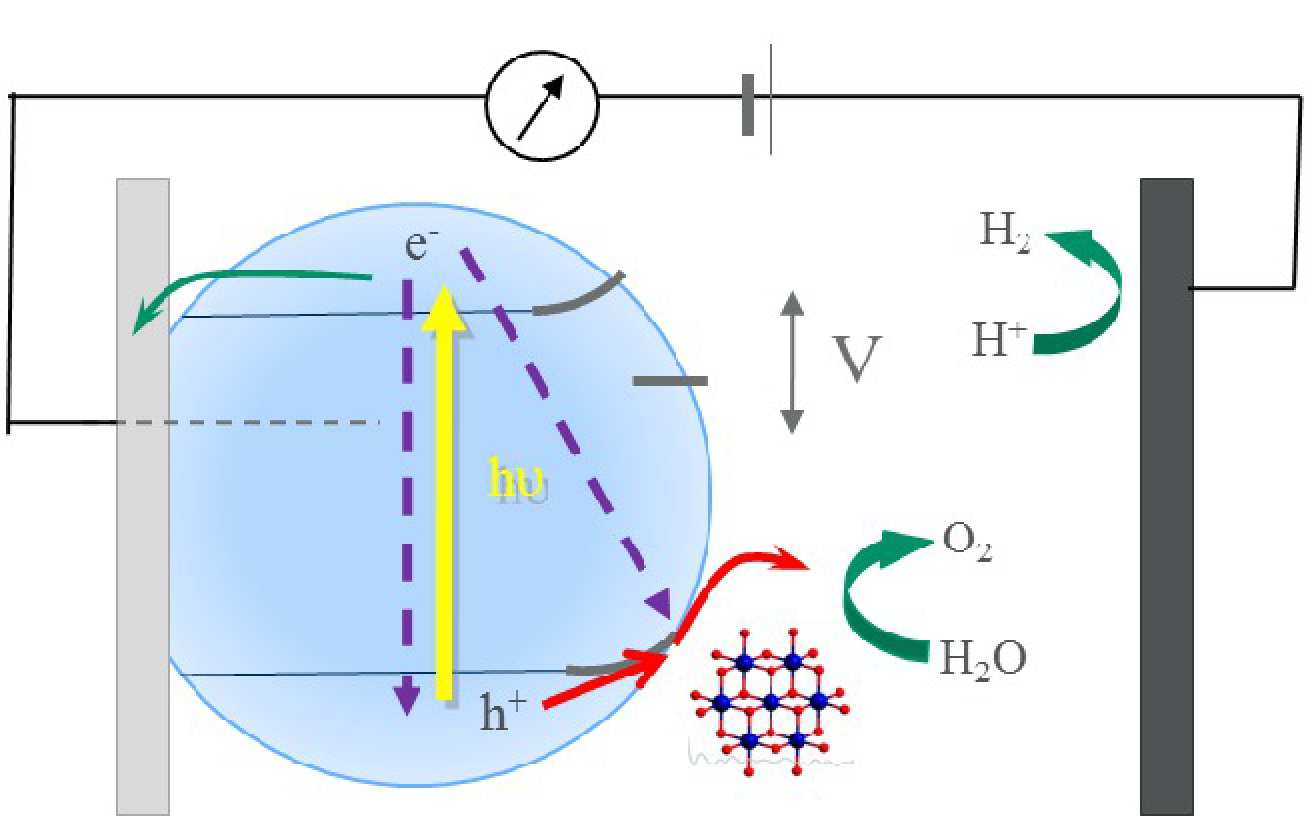
Figure 1. The kinetics of photoanode function studied by transient spectroscopies in the Durrant group.
The study of nanostructured photoanodes able to oxidise water into oxygen
2H2O → O2 + 4H+ + 4e-
Materials such as Fe2O3, BiVO4 or WO3 are potential candidates for solar water splitting photoelectrodes due to their narrow band gap (2.0 - 2.5 eV), which allow visible light harvesting of the solar spectrum, and a sufficiently oxidising valence band that allows the oxidation reaction of water into molecular oxygen. The work of our group is aimed at the determination of the lifetime of the photogenerated electron/hole pairs and the rates of charge carrier recombination and interfacial water oxidation. In order to enhance the photocatalytic activity of the water oxidation photoelectrodes, our group is studying the effects on charge carrier dynamics induced by material doping, incorporation of co-catalysts, changes in the morphology of the material and different surface treatments.
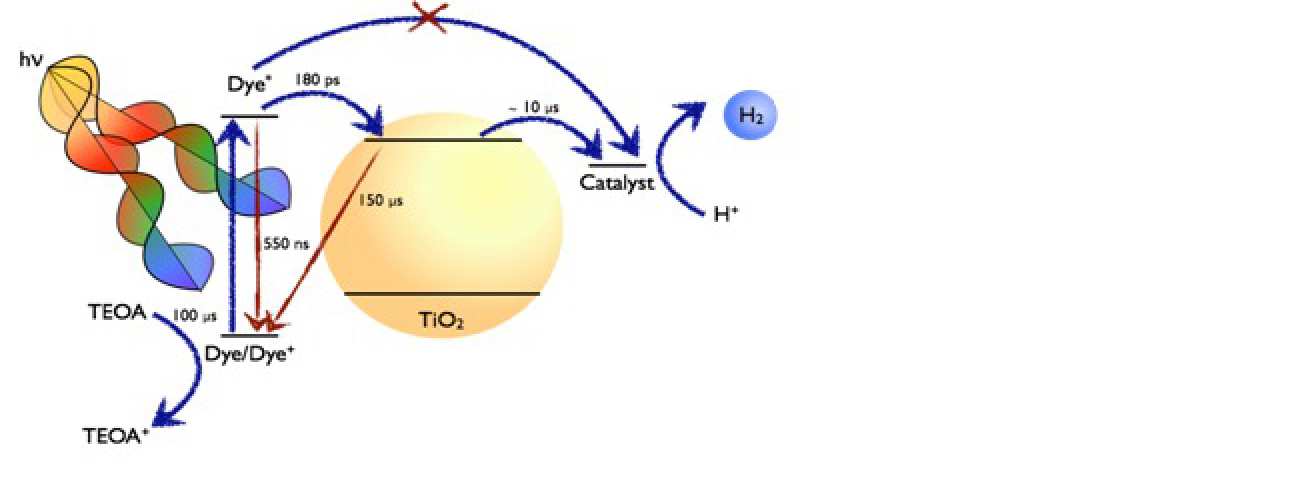
Figure 2. Electron transfer reactions occurring between a semiconductor functionalized with a molecular photosensitiser and a catalyst for proton reduction
The characterization of nanostructured and molecular catalyst-loaded nanostructured photocathodes able to reduce H+ or CO2 into fuels, such as H2, CO or methanol
2H+ + 2e- → H2
CO2 + 6H+ + 6e- → CH3OH
n-type and p-type semiconductors such as TiO2, ZrO2 or Cu2O, which have a conduction band above the reduction potential of H+ or CO2, can be used as photocathodes for the photochemical fuel synthesis. Our group is working on the synthesis and deposition of nanoparticulate semiconductors onto a solid support, in order to prepare and characterise mesoporous metal oxides photoelectrodes. Our research is mainly focused on the study of the kinetics of the electron transfer reactions that take place at the interface of the photoelectrodes and on the identification of the main charge carrier recombination reactions. In order to increase the lifetime of the charge carrier species, our work includes the preparation of inorganic heterojunctions, the coating of the semiconductor nanoparticles with protective blocking layers or the addition of co-catalysts to their surface. Our group is also investigating the effects on the selectivity and efficiency of the fuel production reaction when functionalizing the photoelectrodes with molecular or nanostructured catalysts.
Publications
List of relevant publications